
2026年9月28日,北京青爱教育基金会在第81届联合国大会高级别周期间举办线上平行交流活动“The World We Are Becoming: Trust, Transformation, and the Human Future”《变局中的世界:信任、变革与人类未来》。
On September 28, 2026, the Beijing Changier Education Foundation held an online parallel exchange event during the High-level Week of the 81st Session of the United Nations General Assembly, titled “The World We Are Becoming: Trust, Transformation, and the Human Future.”
活动围绕本届联合国大会“重建信任、应对转型,建设一个惠及所有人的联合国”这一核心议题,邀请来自联合国及国际发展、商业与投资、教育、公共演讲、文化、环境、科技与艺术等领域的专家和青年代表相聚云端,共同探讨在快速变化的世界中,如何重建人与人、人与制度、人与科技以及人与自然之间的信任,并让青年真正参与塑造未来。
Centered on the core theme of “rebuilding trust, responding to transformation, and building a United Nations that works for all,” the event brought together experts and youth representatives from the United Nations and the fields of international development, business and investment, education, public speaking, culture, the environment, technology, and the arts. Together, they explored how trust can be rebuilt between people, between people and institutions, between people and technology, and between humanity and nature in a rapidly changing world, while enabling young people to genuinely participate in shaping the future.
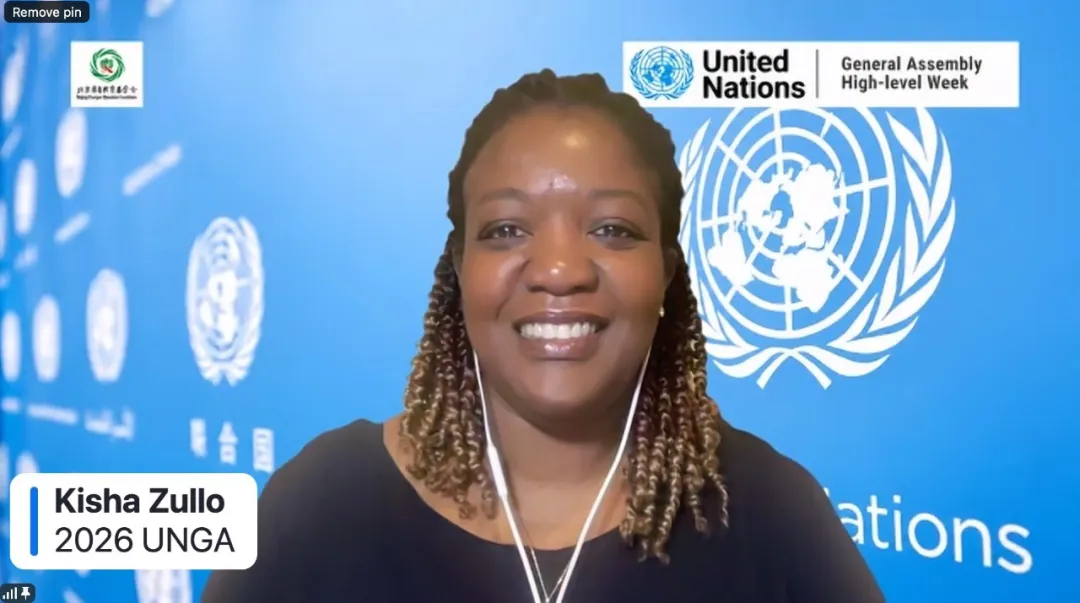
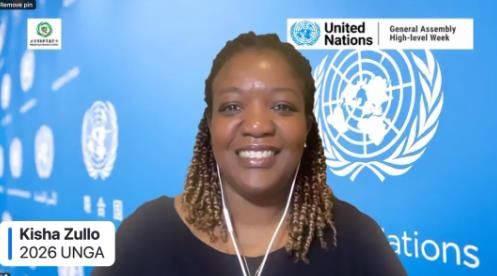
本次活动由出生于牙买加的女性领导力倡导者、横跨美国与英国的“女性商业峰会”(Women in Business Summit)创始人 Kisha Zullo 主持。活动提供中、英、法、西班牙四个语种同声传译,促进了一场包容且真正具有全球意义的对话。作为具有联合国经济及社会理事会(ECOSOC)特别咨商地位的社会组织,北京青爱教育基金会持续推动青年、女性、儿童及基层社区的声音进入国际交流与全球对话。
The event was moderated by Kisha Zullo, a Jamaican-born champion of women’s leadership and founder of the Women in Business Summit in the United States and the United Kingdom. Simultaneous interpretation in Chinese, English, French, and Spanish enabled an inclusive and truly global dialogue. As a social organization in Special Consultative Status with the United Nations Economic and Social Council (ECOSOC), the Beijing Changier Education Foundation continues to bring the voices of youth, women, children, and grassroots communities into international exchange and global dialogue.
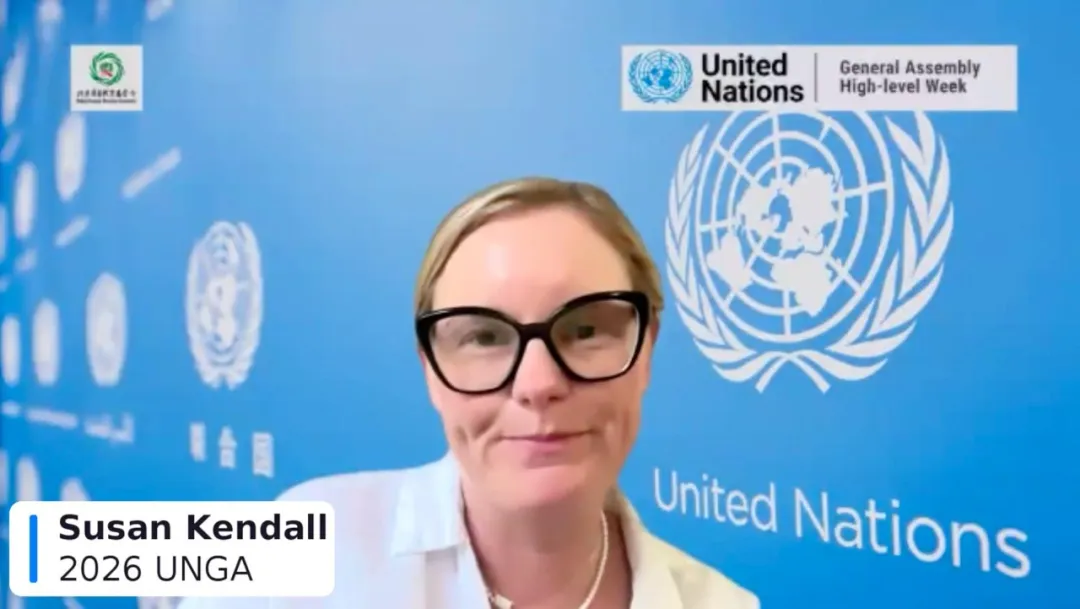
让青年女性从“被讨论者”成为未来的共同塑造者
联合国及国际性别平等与社会融入专家 苏珊·肯德尔(Susan Kendall) 从青年参与和性别平等切入,提出一个关键问题:“谁有权塑造未来?”
她结合在博茨瓦纳与青少年母亲共同工作的经历指出,真正有意义的青年参与,不能停留在“邀请青年出现”或“听取青年意见”,而应进一步走向影响决策和共享权力。尤其对于青年女性而言,性别平等与青年领导力并不是两个独立议题,而是彼此紧密相连。
她强调,赋能不能等到女性成年后才开始。教育、技能、安全空间、数字接入、经济机会以及免受暴力与有害习俗侵害的环境,都决定着女孩能否真正建立自信、表达观点并参与决策。
在她看来,重建信任的一个重要标志,就是让年轻女性能够真切感受到:“我的声音在这里有意义,我的未来在这里有意义,我能够参与决定下一步会发生什么。” 苏珊拥有十余年国际性别平等实践经验,曾参与联合国儿童基金会及英国外交、联邦与发展事务部相关项目。
From Being Discussed to Co-Shaping the Future: Young Women as Partners in Change
Susan Kendall, a United Nations and international expert on gender equality and social inclusion, approached the discussion through the lens of youth participation and gender equality, asking a central question: “Who gets to shape the future?” Drawing on her experience working with adolescent mothers in Botswana, she emphasized that meaningful youth participation must go beyond simply inviting young people to be present or listening to their views; it should extend to influencing decisions and sharing power. For young women in particular, gender equality and youth leadership are deeply interconnected. She stressed that empowerment cannot wait until adulthood: education, skills, safe spaces, digital access, economic opportunity, and protection from violence and harmful practices all shape whether girls can build confidence, express their views, and participate in decision-making. In her view, an important sign of rebuilding trust is when young women can genuinely feel: “My voice matters here. My future matters here. I can help decide what happens next.” Kendall brings more than a decade of international experience in gender equality and has contributed to initiatives connected with UNICEF and the UK Foreign, Commonwealth & Development Office.
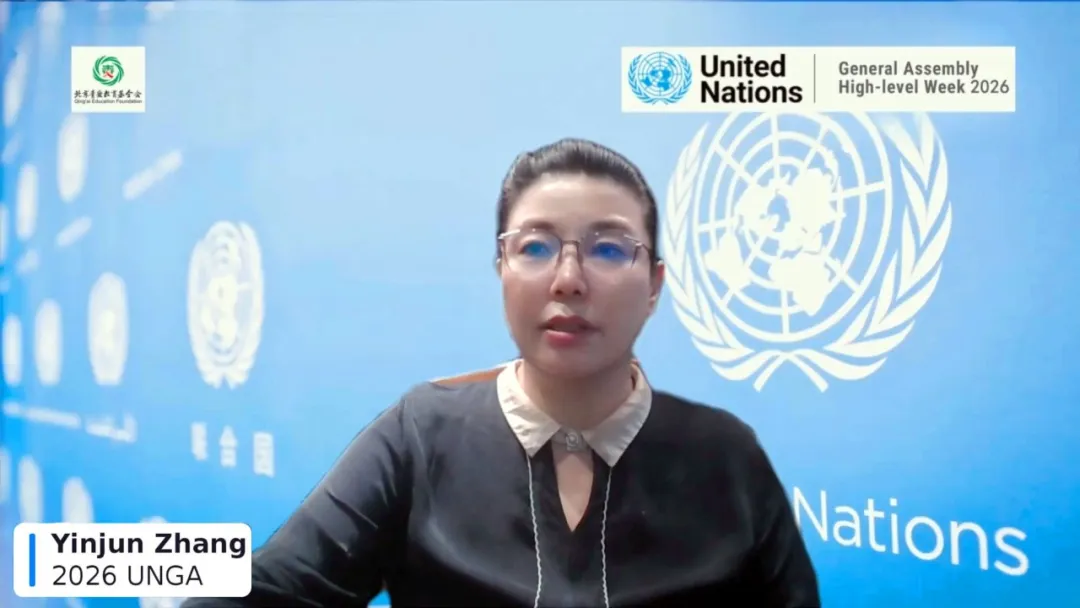
从倾听到行动,让民间社会成为连接全球与社区的桥梁
北京青爱教育基金会创办人、理事长张银俊从青爱二十余年的实践出发,将“重建信任”落到学校、家庭、社区和每一个真实生命之中。
她指出,“信任往往在沉默中流失,而信任也必须通过对话重新建立。” 从最初推动青少年艾滋病防治和性教育,到青爱小屋、母爱书院、师资培训,再到长期支持艾滋病孤儿教育和推动公益电影进入学校、家庭与社区,青爱的实践始终围绕一个核心:创造让人能够说话、倾听并重新建立信任的空间。
她特别强调,青年不应仅被视为发展的受益者,而应成为伙伴、参与者和变革的推动者。民间社会虽然不拥有联合国大会中的投票权,却拥有一种不可替代的优势 - 离普通人最近。
她呼吁进一步扩大民间社会参与多边对话的有效渠道,把基层教育视为重建社会信任的重要基础设施,并加强南南合作,让更多来自社区、学校和家庭的实践能够跨越文化与国界,相互学习、共同成长。基金会目前已建立超过1400所青爱小屋,并持续推动青少年健康、心理支持、家庭教育和公益教育。
From Listening to Action: Civil Society as a Bridge Between Global Agendas and Communities
Zhang Yinjun, founder and chairperson of the Beijing Changier Education Foundation, drew on more than two decades of the Foundation’s work to bring the idea of “rebuilding trust” into schools, families, communities, and individual lives. She observed that “trust is often lost in silence, and trust must also be rebuilt through dialogue.” From early work in adolescent HIV/AIDS prevention and sexuality education to Qing’ai Huts, Mother Love Academies, teacher training, long-term educational support for children orphaned by AIDS, and public-interest films brought into schools, families, and communities, the Foundation’s work has centered on creating spaces where people can speak, listen, and rebuild trust. She emphasized that young people should not be seen only as beneficiaries of development, but as partners, participants, and drivers of change. Although civil society does not hold a vote in the United Nations General Assembly, it has an irreplaceable advantage: it is closest to ordinary people. She called for more effective channels for civil society participation in multilateral dialogue, recognition of grassroots education as essential infrastructure for rebuilding social trust, and stronger South-South cooperation so that practices emerging from communities, schools, and families can cross cultures and borders, learn from one another, and grow together. The Foundation has now established more than 1,400 Qing’ai Huts and continues to advance youth health, psychological support, family education, and public-interest education.
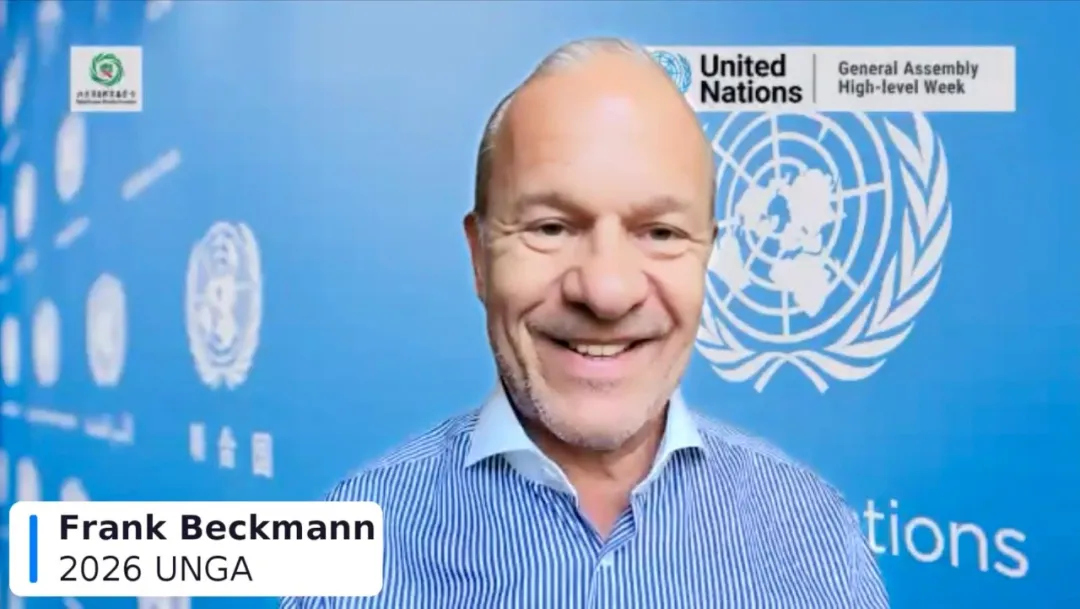
在快速转型中,用理解重新建立信任
德国 GVI Investment Advisory 首席执行官、世界商业天使投资论坛相关领导者 Frank Beckmann 从全球商业与领导力经验出发,探讨了一个看似简单却极具挑战的问题:当信任破裂时,真正破裂的究竟是什么?
他认为,很多时候,问题并不只是事实本身,而是人们逐渐失去了观察和理解他人立场的能力。在不确定和快速变化的环境中,人更容易紧紧抓住自己的观点,从而走向情绪化、对立与防御。
他提出,未来的领导力需要同时容纳两种能力:既保持自己的信念,也保留理解其他视角的开放性。真正的理解,不只是“我觉得自己理解了对方”,而是让对方感受到自己被看见、被倾听和被理解。
他以“万花筒”作比喻,鼓励青年不断转动观察世界的角度。转型如果没有信任,可能走向混乱;信任如果拒绝转型,则可能陷入停滞。未来属于那些能够在二者之间找到平衡,并以清晰、同理心和行动力作出选择的人。
Rebuilding Trust Through Understanding in a Time of Rapid Transformation
Frank Beckmann, CEO of Germany-based GVI Investment Advisory and a leader associated with the World Business Angels Investment Forum, drew on his global business and leadership experience to explore a deceptively simple but difficult question: when trust breaks down, what is it that actually breaks? He suggested that the problem is often not only the facts themselves, but also a gradual loss of the ability to see and understand other people’s perspectives. In uncertain and rapidly changing environments, people may cling more tightly to their own views, becoming more emotional, polarized, and defensive. He argued that future leadership must hold two capacities at once: remaining grounded in one’s own convictions while staying open to understanding other perspectives. Genuine understanding is not simply thinking that we understand another person; it is helping that person feel seen, heard, and understood. Using a kaleidoscope as a metaphor, Beckmann encouraged young people to keep changing the angle from which they view the world. Transformation without trust can lead to chaos, while trust that resists transformation can lead to stagnation. The future, he argued, belongs to those who can balance the two and make choices with clarity, empathy, and the ability to act.
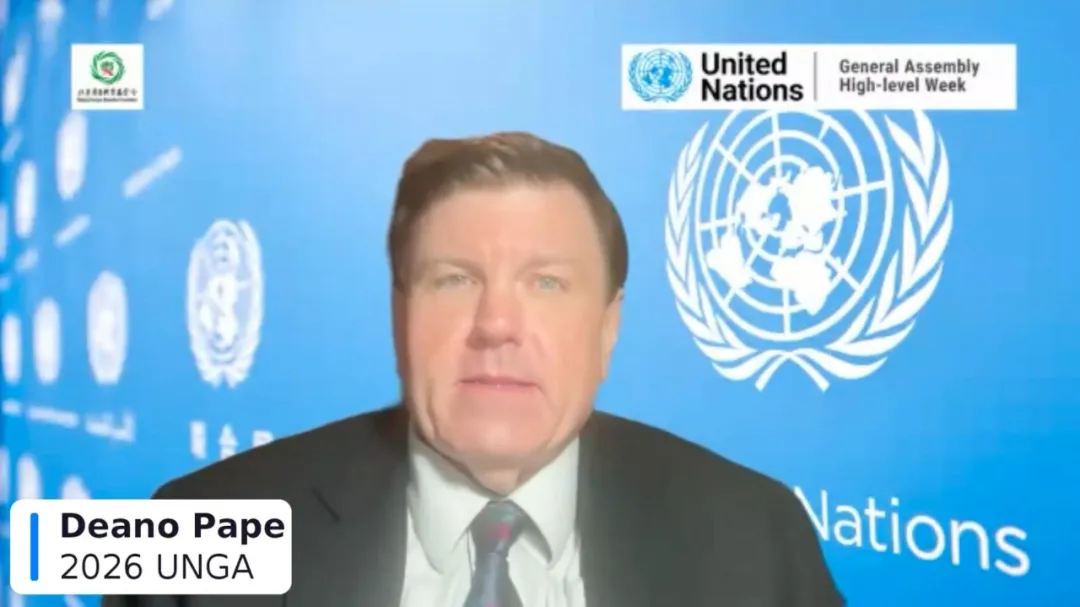
以批判性思维和公共表达培养下一代领导力
美国国家演讲与辩论协会竞赛专家、前哈佛大学暑期辩论工作坊公共演讲与论证课程主任 Deano Pape 拥有超过25年的演讲、辩论与大学教育经验,长期致力于批判性思维、公共表达和青年领导力培养。
在发言中,他深入探讨了虚假信息、社交媒体中的极化内容以及数字操控如何不断侵蚀社会信任与人际联结。他呼吁将媒体与信息素养全面融入教育体系,同时倡导健康的数字使用习惯、深度专注,以及以事实为依据、彼此尊重的理性辩论。Pape 还介绍了面向青少年的“分享一块饼干”(Split a Cookie)倡议,将数字素养教育与面对面对话相结合,旨在重建共同基础,将分歧转化为理解。
Cultivating the Next Generation of Leadership Through Critical Thinking and Public Expression
Deano Pape, a competition expert with the National Speech & Debate Association and former Director of Public Speaking and Argumentation at the Harvard Summer Debate Workshop, brings more than 25 years of experience in speech, debate, and higher education, with a longstanding commitment to critical thinking, public expression, and youth leadership. In his address, he explored how misinformation, polarizing social media content, and digital manipulation are eroding trust and human connection. He called for media and information literacy to be integrated throughout education, alongside healthier digital habits, deeper focus, and respectful, evidence-based debate. Pape also introduced Split a Cookie, a youth-centered initiative combining digital literacy education with face-to-face dialogue to rebuild common ground and transform division into understanding.
用AI倾听地球,用“人类原生智慧”作出选择
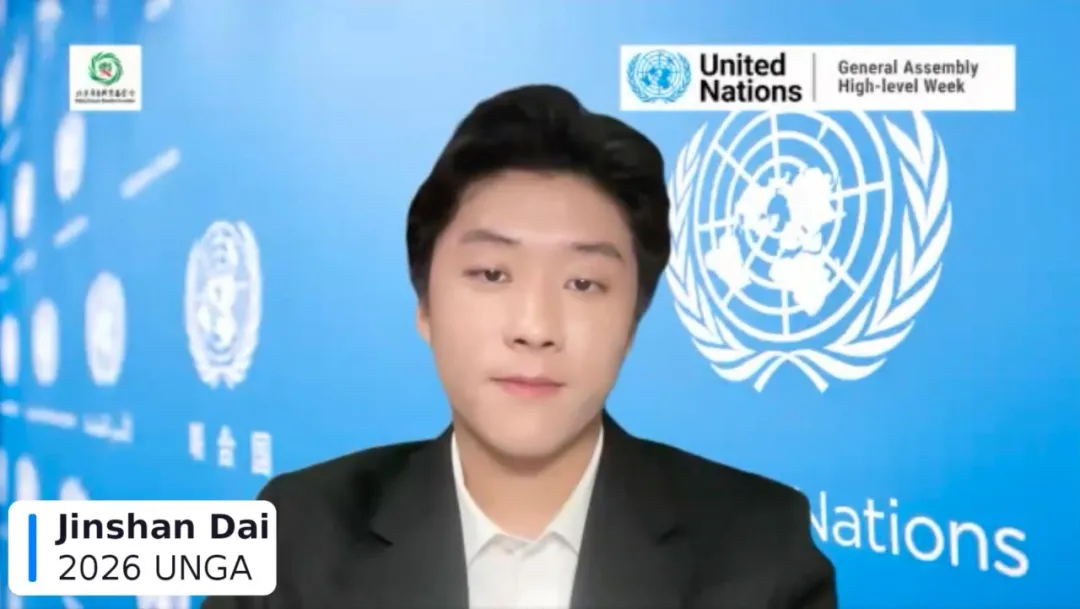
青年环境倡导者、One Planet Unity 创始人戴金杉(Jinshan Dai) 从一次高海拔牧区田野调研中的真实经历展开思考。
当一只藏马熊距离他仅约五米时,他既看到了牧民失去牲畜所面临的现实生计压力,也看到了野生动物为了生存所承受的困境。这让他意识到,人与自然冲突不应只是追问“谁对谁错”,而应该进一步追问:“如何让双方都能够生存?”
他提出,解决复杂环境问题需要同时倾听科学、科技、地方经验以及自然本身所发出的信号。卫星、传感器、影像识别和人工智能能够帮助人类发现生态变化,但“信号不是决定,数据不是智慧,预测也不是责任”。
因此,他提出 OHI - Original Human Intelligence(人类原生智慧) 的概念,即同理心、判断力和责任感。AI 可以帮助人类识别信号,而最终决定如何回应的,仍然应该是人类。
他强调,未来不会只由更聪明的机器塑造,也将由更有智慧的人类塑造。
Listening to the Earth with AI, Deciding with “Original Human Intelligence”
Youth environmental advocate and One Planet Unity founder Jinshan Dai reflected on a real experience from field research in a high-altitude pastoral area. When a blue bear came within about five meters of him, he saw both the real livelihood pressures faced by herding families when livestock are lost and the struggle of wildlife trying to survive. The experience led him to conclude that human-wildlife conflict should not be reduced to asking “Who is right and who is wrong?” but should instead ask, “How can both sides survive?” He argued that solving complex environmental problems requires listening simultaneously to science, technology, local knowledge, and the signals of nature itself. Satellites, sensors, image recognition, and artificial intelligence can help people detect ecological change, but “signals are not decisions, data are not wisdom, and predictions are not responsibility.” He therefore introduced the concept of OHI - Original Human Intelligence - defined by empathy, judgment, and responsibility. AI can help people identify signals, but the responsibility for deciding how to respond must remain human. He emphasized that the future will be shaped not only by smarter machines, but also by wiser human beings.
从“抱拳礼”理解真正的力量:克制、责任与文明
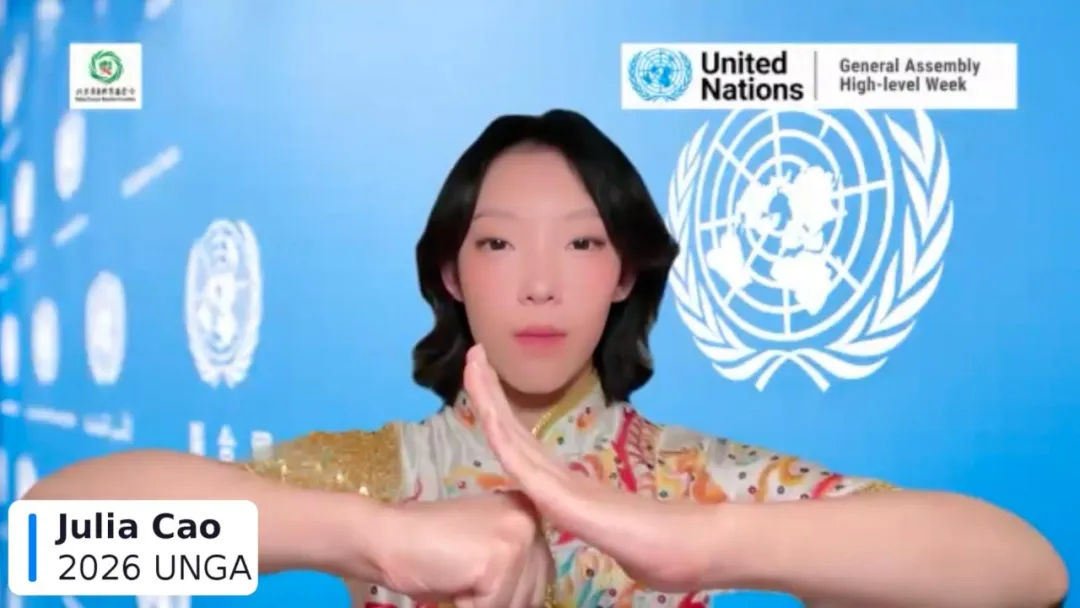
来自北京的青年代表曹璟珠(Julia Cao) 从自己练习了12年的中国武术出发,以传统“抱拳礼”作为理解国际关系与人类文明的一面镜子。
她将右手握拳理解为力量,将左手覆拳理解为文化、和平与武德。掌覆盖拳,意味着真正的力量并非单纯拥有打击能力,而是拥有约束力量、控制力量和在必要时选择不使用力量的智慧。
她指出,在武术中,竞争只有在规则、尊重与克制的框架下才具有积极意义;同样,在国际社会中,竞争如果失去规则和约束,就可能让对抗超越人类代价本身。
面对军事技术和人工智能的发展,她呼吁国际社会不仅思考如何让“拳头”更强,也要确保文明、伦理、法律、同理心和克制继续发挥“手掌”的作用。
她提出,真正的强大并不是摧毁的能力,而是保护的智慧。传统武术中的武德,也可以为当代世界理解权力、责任和和平提供新的文化视角。
Understanding True Strength Through the “Fist-and-Palm Salute”: Restraint, Responsibility, and Civilization
Youth representative Julia Cao of Beijing drew on 12 years of Chinese martial arts practice, using the traditional fist-and-palm salute as a lens through which to consider international relations and human civilization. She described the right fist as representing strength and the left palm covering it as representing culture, peace, and martial virtue. The palm covering the fist suggests that true strength lies not simply in the ability to strike, but in the wisdom to restrain and control power and, when necessary, to choose not to use it. She noted that in martial arts, competition is constructive only within a framework of rules, respect, and restraint; likewise, in the international community, competition without rules and limits can allow confrontation to overshadow its human costs. As military technology and artificial intelligence advance, she urged the international community not only to ask how to make the “fist” stronger, but also to ensure that civilization, ethics, law, empathy, and restraint continue to serve as the “palm.” True strength, she argued, is not the capacity to destroy but the wisdom to protect, and the martial tradition of wude can offer a cultural perspective for understanding power, responsibility, and peace in the contemporary world.
当人工智能开始学习人类的“美”
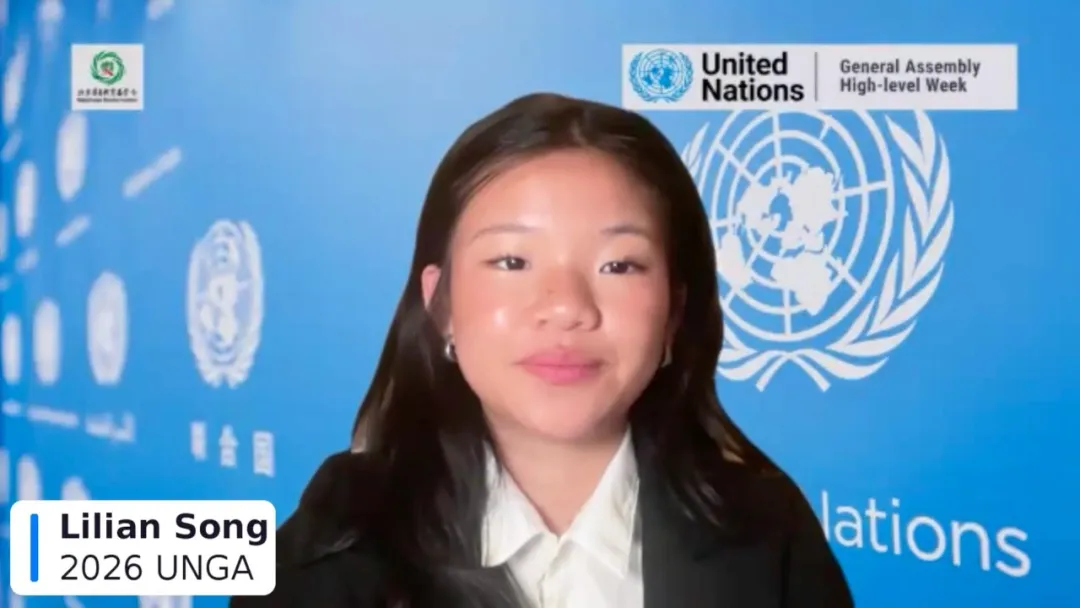
青年辩手与心理学研究者宋子衿(Lilian Song)从自己打开 TikTok 美颜滤镜的一次经历出发,提出了一个极具时代感的问题:AI究竟是在创造新的审美标准,还是在学习并放大人类已经存在的偏见?
她指出,人工智能并没有凭空创造关于肤色、身材、五官和女性外貌的偏见,但它可以继承这些偏见,并通过算法将其优化、个性化和规模化传播。
尤其对于正处于自我认同形成阶段的青少年而言,AI 美颜、社交媒体推荐机制和高度逼真的生成图像,可能使“不现实的审美”变得越来越难以察觉。
她呼吁扩大AI训练数据和广告呈现中的多样性,加强青年媒体素养、心理韧性和同伴支持,并推动企业对算法设计与传播承担更多责任。
她最后提出:真正值得追问的,不是“AI认为什么是美?”,而是“我们正在教AI看见什么?” 宋子衿同时长期参与国际辩论、女性赋能、青年指导与社区领导。
When Artificial Intelligence Begins to Learn Human “Beauty”
Youth debater and psychology researcher Lilian Song began with her experience of opening a TikTok beauty filter and raised a distinctly contemporary question: Is AI creating new beauty standards, or is it learning and amplifying biases that already exist in human society? She noted that artificial intelligence did not invent biases concerning skin color, body type, facial features, or women’s appearance, but it can inherit those biases and use algorithms to optimize, personalize, and spread them at scale. For adolescents whose identities are still developing, AI beauty filters, social-media recommendation systems, and highly realistic generated images may make unrealistic beauty standards increasingly difficult to recognize. She called for greater diversity in AI training data and advertising, stronger media literacy, psychological resilience, and peer support for young people, and greater corporate responsibility for algorithmic design and dissemination. She concluded with a question: “What is truly worth asking is not, ‘What does AI think is beautiful?’ but ‘What are we teaching AI to see?’” Song is also actively engaged in international debate, women’s empowerment, youth mentoring, and community leadership.
让青年在数字时代重新掌握学习的主动权
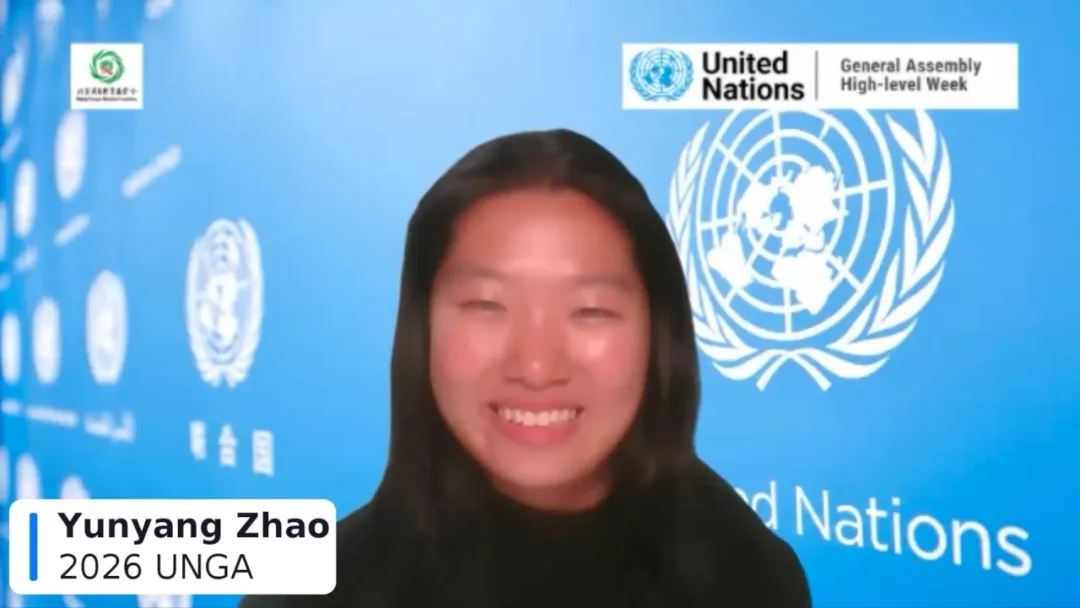
北京青年代表 赵云扬(Victoria Yunyang Zhao) 从自己八年多的教学经历和超过550小时的电子游戏体验出发,讨论数字媒体和人工智能正在如何改变年轻人的学习、注意力与自主性。
她认为,数字时代真正值得关注的,不只是青年“用了多少屏幕”,而是算法正在多大程度上替我们决定看什么、学什么、相信什么。
她提出,与其简单地把娱乐和学习视为对立,不如进一步思考如何从青年已经主动选择的游戏、视频、创作与线上社区中发现教育价值,让年轻人从被动的信息消费者变成主动学习者。
她呼吁青年学会有意识地管理注意力,家长更多通过开放式问题激发好奇,教育者理解而不是否定青年的数字生活,同时由政策制定者推动数字素养、教师培训、儿童数据保护和更加负责任的技术设计。
她强调,未来教育真正需要的并非“更多科技”或“更少科技”,而是更加公平、有意识、安全并以人为中心的科技。
Helping Young People Reclaim Agency in Learning in the Digital Age
Beijing youth representative Victoria Yunyang Zhao drew on more than eight years of teaching experience and over 550 hours of video-game experience to examine how digital media and artificial intelligence are changing young people’s learning, attention, and autonomy. She argued that the central question in the digital age is not simply how much screen time young people have, but the extent to which algorithms are deciding what we see, what we learn, and what we believe. Rather than treating entertainment and learning as opposites, she suggested looking for educational value in the games, videos, creative activities, and online communities that young people already choose for themselves, helping them move from passive consumers of information to active learners. She called on young people to manage their attention more intentionally, parents to use open-ended questions to encourage curiosity, educators to understand rather than dismiss young people’s digital lives, and policymakers to advance digital literacy, teacher training, child data protection, and more responsible technology design. She emphasized that the future of education does not need simply “more technology” or “less technology,” but technology that is more equitable, intentional, safe, and human-centered.
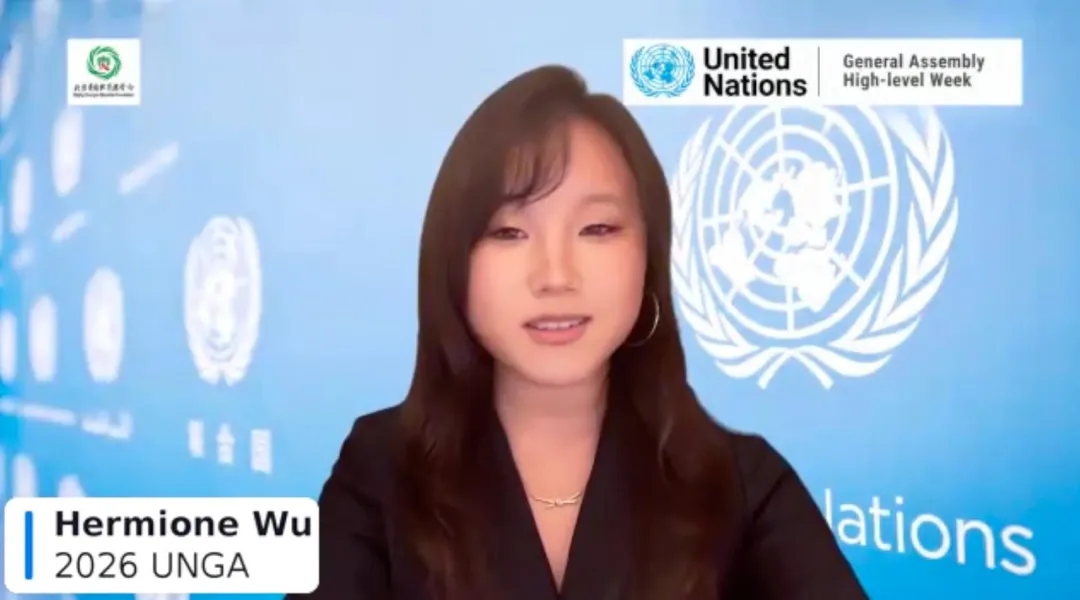
从医学突破走向真正“可获得、可理解、可信任”的全民健康
青年代表 吴析容(Hermione Wu) 以“医学突破之后,我们还需要做什么”为核心,重新思考“全民健康覆盖”的真正含义。
她从云南大理的一次观察谈起:当地人出于审美和文化习惯高度防晒,但这也让她开始思考文化如何影响健康行为。此后,她将这一问题延伸到慢性病研究、早期筛查以及儿童健康素养之中。
她指出,医院的存在、疫苗的研发、诊断技术的突破,并不意味着医疗已经真正“可及”。一项医学创新只有在患者能够获得、负担得起、理解、信任并真正使用时,才完成了从实验室到人的最后一公里。
她呼吁进一步投资基层医疗、疾病预防、疫苗、筛查与早期检测,同时确保基因组学、分子诊断和精准医疗等新技术不会成为少数人的特权。真正以人为本的医疗,不仅关乎技术,也关乎文化、健康素养、尊严和患者参与自身医疗决策的能力。
From Medical Breakthroughs to Healthcare That Is Truly Accessible, Understandable, and Trusted
Youth representative Hermione Wu centered her remarks on the question, “What more must we do after a medical breakthrough?” as she reconsidered the true meaning of universal health coverage. She began with an observation from Dali, Yunnan, where strong sun-protection practices shaped by aesthetic and cultural preferences led her to consider how culture influences health behavior. She later extended that inquiry into chronic-disease research, early screening, and children’s health literacy. Wu noted that the existence of hospitals, the development of vaccines, and advances in diagnostic technology do not automatically make healthcare truly accessible. A medical innovation completes the final mile from the laboratory to the individual only when patients can access it, afford it, understand it, trust it, and actually use it. She called for greater investment in primary healthcare, disease prevention, vaccines, screening, and early detection, while ensuring that emerging technologies such as genomics, molecular diagnostics, and precision medicine do not become privileges available only to a few. Truly human-centered healthcare, she emphasized, is not only about technology, but also about culture, health literacy, dignity, and patients’ ability to participate in decisions about their own care.
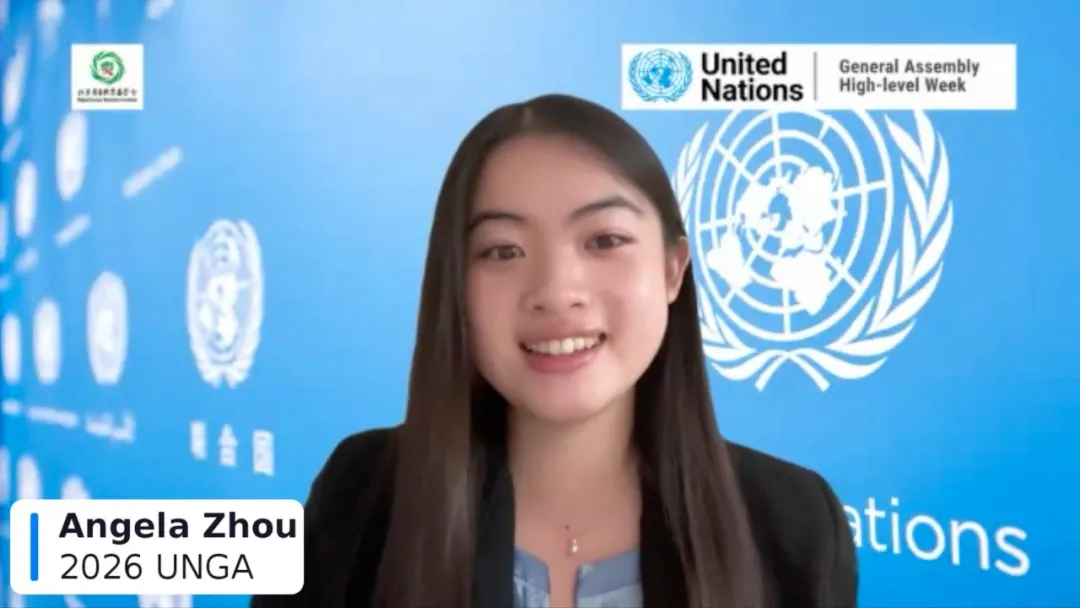
让舞蹈成为连接、疗愈与和平的“社会基础设施”
美国青年代表 周栩如(Angela Zhou) 将自己的舞蹈实践与人权、心理学和文化研究结合,提出一个独特观点:艺术并不是可有可无的装饰,而可以成为建设韧性社区的重要“社会基础设施”。
她认为,对经历战争、暴力、歧视或创伤的人而言,有些记忆并不能仅靠语言表达。舞蹈作为超越语言的身体表达,可以帮助人们表达难以说出的情绪,也让从未经历这些创伤的人更接近他人的感受。
结合为特殊需要儿童编排舞蹈、将手语融入舞蹈作品的经验,她提出,应把艺术和舞蹈更加系统地纳入教育、和平建设、残障融合、心理健康和危机后社区恢复项目。
她强调,道路连接地点,技术连接系统,而艺术连接人类本身。真正可持续的社区不仅需要基础设施,也需要信任、归属、文化记忆以及共同疗愈的能力。
Making Dance a “Social Infrastructure” for Connection, Healing, and Peace
U.S. youth representative Angela Zhou connected her dance practice with human rights, psychology, and cultural studies to advance a distinctive idea: art is not an optional decoration, but can serve as important “social infrastructure” for building resilient communities. She observed that for people who have experienced war, violence, discrimination, or trauma, some memories cannot be expressed through words alone. As a form of embodied expression that crosses language barriers, dance can help people communicate emotions that are difficult to put into words while helping those who have not lived through such trauma come closer to understanding others’ experiences. Drawing on her work choreographing for children with special needs and incorporating sign language into dance, she proposed integrating art and dance more systematically into education, peacebuilding, disability inclusion, mental health, and post-crisis community recovery. She emphasized that roads connect places, technology connects systems, and art connects human beings. Truly sustainable communities need not only physical infrastructure, but also trust, belonging, cultural memory, and the capacity to heal together.
让不同的声音,共同塑造“我们正在成为的世界”
Let Different Voices Shape “The World We Are Becoming” Together
本次活动的议题横跨性别平等、全民健康、商业领导、人工智能、人与自然共生、基层公益、文化与和平、教育创新、青年心理以及艺术表达,但不同演讲最终汇聚到一个共同的问题:
在技术、社会和全球秩序快速转型的时代,我们希望成为一个怎样的世界?
嘉宾们的分享显示,重建信任不仅发生在国家与制度之间,也发生在一个女孩是否相信自己的声音会被听见,一个患者是否理解自己的治疗,一个青年是否能够控制自己的注意力,一个社区是否拥有参与解决问题的权利,以及人与自然是否能够在冲突中找到新的共存方式。
技术可以扩展人的能力,却不能代替人的责任;制度可以提供框架,却不能代替人与人之间的理解;全球议程可以确立方向,而真正持久的改变,仍然需要回到社区、学校、家庭和青年本身。
正如本次论坛多位嘉宾反复强调的那样,倾听、理解、参与、责任与行动,是信任重新生长的起点。
The event spanned gender equality, universal health, business leadership, artificial intelligence, human-nature coexistence, grassroots public-interest work, culture and peace, educational innovation, youth psychology, and artistic expression. Yet the different presentations ultimately converged on one common question:
In an era of rapid technological, social, and global transformation, what kind of world do we want to become?
The speakers’ reflections showed that rebuilding trust does not happen only between countries and institutions. It also appears in whether a girl believes her voice will be heard, whether a patient understands their treatment, whether a young person can manage their own attention, whether a community has the right to participate in solving problems, and whether people and nature can find new forms of coexistence amid conflict.
Technology can expand human capacity, but it cannot replace human responsibility. Institutions can provide frameworks, but they cannot replace understanding between people. Global agendas can set direction, but lasting change must still take root in communities, schools, families, and young people themselves.
As many speakers repeatedly emphasized, listening,understanding,participation,responsibility,and action are the starting points from which trust can grow again.
北京青爱教育基金会将继续发挥联合国经济及社会理事会特别咨商地位的桥梁作用,把来自基层社区、青年和社会实践的声音带入全球交流,也把国际社会关于儿童、青年、女性、健康、教育与可持续发展的共识带回社区,推动更多跨文化、跨世代和跨领域的合作。
我们正在成为的世界并非已经写好。
它正在由今天我们选择倾听谁、理解谁、赋权于谁,以及我们愿意共同承担怎样的责任而被塑造。
在信任中连接,在转型中行动,让青年不仅看到未来,也真正参与创造未来。
The Beijing Changier Education Foundation will continue to use its role as an organization in Special Consultative Status with ECOSOC to serve as a bridge: bringing voices from grassroots communities, young people, and social practice into global exchange, while carrying international dialogue and consensus on children, youth, women, health, education, and sustainable development back into communities and advancing more cross-cultural, intergenerational, and cross-sector collaboration.
The world we are becoming has not already been written.
It is being shaped by whom we choose to listen to, whom we seek to understand and empower, and what responsibilities we are willing to share.
Connect through trust, act through transformation, and enable young people not only to see the future, but to take part in creating it.
特别鸣谢 | Special Acknowledgements
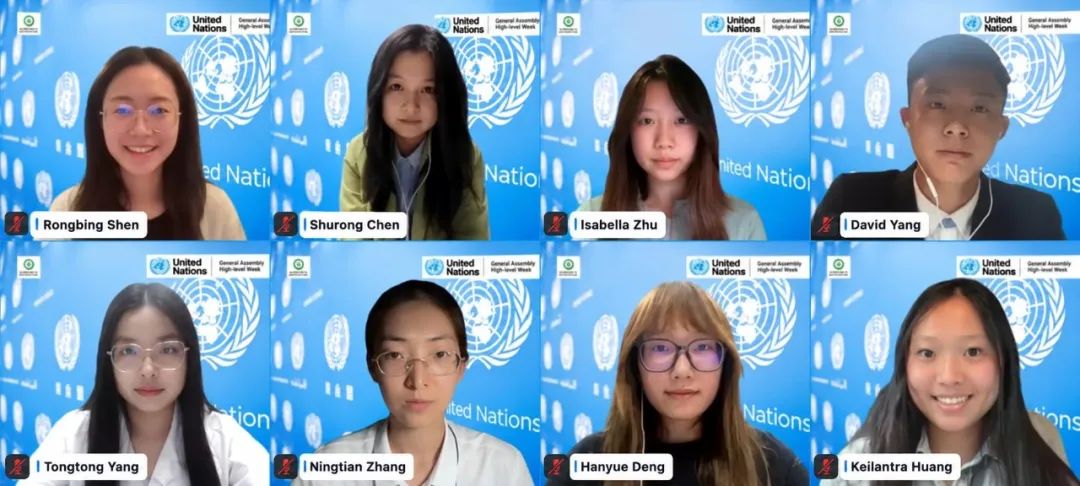
特别感谢北京青爱教育基金会新近任命的驻联合国代表之一沈容冰女士,感谢她在本次活动中承担同声传译协调及培训班工作,并为线上会议提供重要的技术支持与保障。
我们同时衷心感谢北京外国语大学的杨童童、邓涵月和陈姝蓉为会议提供中英同声传译;黄佳玉、杨其羽、周子琪和朱雅祺提供英法同声传译;以及张宁恬提供西班牙语同声传译。各位译员的专业素养与无私投入,搭建了跨越语言与文化的沟通桥梁,使青年与基层社区的声音能够在真正具有全球影响力的平台上被听见。
Special recognition is extended to Rongbing Shen, one of the Beijing Changier Education Foundation’s recently appointed Representatives to the United Nations, for her invaluable coordination, and technical support throughout the event. We also express our sincere appreciation to Hanyue Deng, Tongtong Yang, and Shurong Zhu of Beijing Foreign Studies University for providing Chinese-English interpretation, and to Keilantra Huang, David Yang, Audrey Zhou, and Isabella Zhu for providing English-French interpretation. Ningtian Zhang for providing Spainish interpretation. Their professionalism and dedication built bridges across languages and cultures, ensuring that youth and grassroots voices could be heard on a truly global platform.

香港新闻社
有视界·有世界

习近平听取李家超述职报告


李家超邀社区客厅家庭礼宾府开派对 共度温馨圣诞

日媒:丰田决定在上海建厂 生产100%电动汽车

全球南方9国明年正式成为金砖伙伴国

李家超分享礼宾府圣诞装饰 祝愿平安喜乐

香港国安处通缉钟剑华等6人 悬赏100万

邓炳强:将向法庭申请没收许智峰犯罪得益 市民不应与潜逃者有任何金钱瓜葛